Tuesday, March 17, 2015

Business and Busy-Ness

I am so bad at updating ... someday I'll get the hang of posting regularly for more than a few weeks at a time. But since January, I have been legitimately busy, and good things have come of it.

I made another round of revisions to my book manuscript and am letting it sit until June, when I should get feedback from the Writers League of Texas manuscript competition folks and a couple of friends. After that, I edited the manuscript for a romance novel that a colleague wrote, and there's reasonable hope that it will get picked up by one of the big romance publishing houses.

Now I'm learning HTML and CSS so that I can eventually design my own web page. (Yay!)

And, in my quest to get on stage at least 10 times this year, and out of my love for sharing my poetry with people who normally wouldn't give a damn about poetry, I'm going to be performing more regularly at the Triple Crown Open Mic on Sunday nights.

Between all this, I found out that my writing is gaining appreciation in Singapore, San Francisco and San Marcos. "The Soft Burden," the essay I posted here several months ago about the very odd family heirloom I'll be inheriting and all that it entails, was one of six finalists in the nonfiction category at the San Francisco Writers Conference contest this year. A poem I wrote about the same subject matter was published in Issue 3 of Junoesq, a Singapore-based literary journal for women. My blog post on the Just For Fun Parade from last April will be reprinted in the April edition of SMTX Magazine here in San Marcos. (I won't link back to that blog post here because it'll look so awesome in print, you should read it in the magazine when it comes out.)


And even with all this writing stuff going on, there is still the dance. I performed my first drum solo, choreographed by myself with help from my teacher Jamie Lynn, in February at Euro Cafe. It was terrifying, but I made it through and apparently did a pretty good job, and I hope to be able to perform it again soon -- if not here in town then at another venue. I'm currently in the middle of the 90-Day Belly Dance Challenge organized by Alia Thabit. It requires at least 20 minutes of improvisational dancing for 90 days. It's been an eye-opening experience thus far and I'm glad to have found something to get me in the habit of dancing without a plan.

Meanwhile, a bunch of my friends have been busy, too. Last weekend was the surprise party and fund-raiser for Christopher Paul Cardoza, the photographer who moved here just a couple of years ago and has done so much to document and promote the San Marcos live music scene, particularly the shows at Triple Crown. And now, with South By Southwest going on just up the road in Austin, many of our local bands are showing an international audience how we do things down here. Chasca, 4orms and Ghosts of Dixie are just a few of the local bands playing official or unofficial SXSW shows this week and I'm super proud of all of them and glad to call them my friends.

Spring is springing here in our happy little village, and everything is coming to life!


Saturday, December 20, 2014

The Soft Burden, Part 3

This is the final part of an essay I wrote about my family's history of racism and how I try to deal with it. I hope that those of you who've read it have gotten something out of it -- maybe a stark picture of white privilege as it's played out over the centuries, maybe an understanding that not all Southerners are racist, even if we've come from racist backgrounds, maybe a vague sense of hope that we, as a society, can move into a more unified and less traumatic future. For those of you just tuning in, here are links to Part 1 and Part 2.

The Soft Burden
(Part 3)

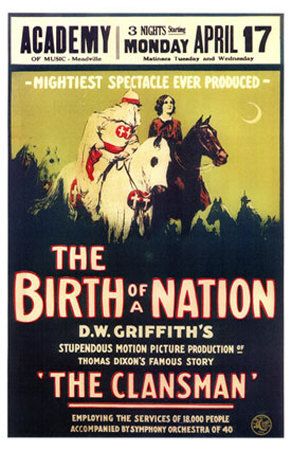
This is where Mom's beliefs and mine come into sharp contrast. Mom has her pride and her Klan stories, and like so many other people born into Southern families she dismisses the KKK as some inconsequential thing from the past. But I am acutely aware that it still exists. A former Grand Wizard held public office and still makes political endorsements (because people still listen to him). In Georgia, a branch of the Klan wants to adopt a stretch of highway for litter cleanup. I see Klansmen as domestic terrorists who are somehow clinging to outdated beliefs and perpetrating acts of violence based on a war that, despite the rhetoric of extremists, has been over for a very long time. But the invalidity of their philosophy does not mean they are extinct, or even endangered. For me, the Klan is part of a very real white supremacist movement and an organization that wants to violently tear down one of the principles I grew up with: equality for all.
(From Wikimedia Commons)


I am fortunate to be surrounded by people who oppose hatred, ignorance and violence, and they do it without resorting to hatred, ignorance and violence themselves. They know their “enemies.” When they protest Klan or other rallies, they dress up as clowns, relying on distraction and irony rather than anger. When I was in college in Austin, a few women I knew went to a KKK rally and asked Klansmen about membership possibilities -- “So can anyone join? Is there a form to fill out? Can I take some of your literature home to share with my family?” – which really impressed me, because the women were Black. I've known other people who oppose the social and political groups that use patriotism and religion as excuses for hatred – and rather than protest angrily, my friends pray for these people to find peace and enlightenment. They have inspired me to do the same.

These are the kinds of people I stand with, but they are not the kind of people I came from. In a way, counting myself among those who oppose the Klan and its ilk deepens my shame about my family history, because I came from a large family full of the kind of people my friends stand against. By action, I am part of a force against injustice; by blood, I'm the very thing I oppose. But believing and acting in opposition to the Klan and any other group that promotes hatred is a possible path to salvation– a way to try to transcend the past.

I had a conversation about the KKK Quilt with a friend of mine who's a missionary. I told her how even though I was not a slave owner or a KKK member I felt a kind of residue from the actions of my ancestors. I told her the quilt seems like a giant symbol of institutional racism that will eventually come to me, like some family curse. She agreed that it's a heavy subject and said she could understand how I might feel like the quilt, and everything it means, is a burden I have to bear. But then she reminded me of the story of Nehemiah in the Old Testament and how he prayed for forgiveness for himself, for his family and for his entire country.

“That kind of thing happened a lot in the Old Testament – one person seeking salvation for a whole group,” she said.

Then we talked about my great-grandmother, Granny, and what she might have been thinking when she grabbed the KKK robe and cut it up into squares to use it for an entirely different purpose.

“She redeemed it,” my friend said. “She turned it into something new.”

And I suppose she did. Granny took something almost universally reviled and turned it into something useful -- something with a connotation of coziness, gentleness, home.

The quilt and I are alike in that no one would ever guess, just from looking at it, where it came from and what secrets it might hold. And if the remnants of that hated robe can be redeemed, perhaps I can, too. What I end up doing with my strange inheritance can help me change how I view myself and my past. Holding on to it seems somehow unhealthy, but giving it away seems like a form of denial, and although I feel shame and disgust about my family's ties to the Klan, I can't deny that they exist.

In the county where Granny lived, there is a small museum dedicated to the area's history. I think the healthiest thing for me to do is loan the KKK Quilt to the museum indefinitely, for display or just for safe keeping. I will tell the curators where it came from – made by the daughter of one of the county's prominent families – and what it is made of – a symbol of hatred given a new and gentle purpose.


The museum houses a collection of the pottery made by the former slaves who ran their own free enterprise after the war. Many of the clay jugs and bottles on display are still whole, survivors of the nearly 150 years since their creation. My ancestors' KKK robe, however, is no longer recognizable. Perhaps putting all these artifacts in the same building can show that freedom endures, but hatred can be rendered powerless and even be turned into something comforting. Perhaps, a century and a half after the Civil War, some of the “general hard feelings” – including my own – can be put to rest.

Thursday, December 18, 2014

The Soft Burden, Part 2

This is the second part of an essay I wrote a few years back about my family's history as slave owners and KKK members and how I try to cope with that. Here's a link to Part 1 and a better explanation of where this essay came from.

The Soft Burden
(Part 2)

I remember looking back through the newspaper archives in the county where my great-grandmother lived and seeing a very brief story about a young Black boy who had been found “accidentally lynched” in a barn sometime around the turn of the century. There wasn't much question in my mind about who might have “accidentally” lynched him, especially after I found out my ancestors who had lived in that county were part of a thriving population of Klan members in the area.

The same county was home to the first Black free enterprise in Texas after the Civil War – a pottery shop operated by the freed slaves of a Presbyterian minister. This could be taken as a sign of enlightenment, and the site of the pottery business has earned national landmark designation. But there are reports of “general hard feelings,” as The Handbook of Texas put it, and violence against the business owners. I can't help but wonder if my ancestors ever acted against the pottery owners  – if the robe that's now part of the KKK Quilt was there during any of the post-war attacks on these men who were trying to become truly independent.

This part of our shared heritage has created quite a few “general hard feelings” between Mom and me. Mom is unflinchingly proud of our family's past, but not because of any lingering racism on her part. She is from the last generation of my family to go to high school before desegregation, and she used the words “colored” and “Negro” for decades, but when social mores changed, she changed with them. And, after all, she raised me to accept everyone as equals and embrace other cultures.

(From Wikimedia Commons)
But Mom's genealogical research revealed so many details of our Southern ancestors' lives and their hardships and accomplishments during and after the Civil War that she became enthralled with the men and women who came before us. She saw, looking back at a century of slow migration and hard fighting, the miraculous sequence of events that had to occur for her to come into this world. Some of those events involved owning slaves. Sometimes I wonder if her pride is a kind of coping mechanism – she might not be at peace with the vein of racism and cruelty in our heritage, but since there's nothing she can do to change it, she's just decided to accept it and wave her Confederate flag high.

If you ask her about why she holds our Southern ancestors in such high esteem, she'll simply say, “You have to remember, these men were fighting for what they believed was right. They weren't right, but it's what they believed in.”

The last time we had that conversation, I wanted to respond that the same could be said for the Nazis, but that would have started a conflagration of a magnitude I was not prepared to deal with. I just shook my head, letting Mom know that even though I knew I could not change her mind, she had not changed mine, either.


A couple of years ago, Mom presented me with a special gift. She had just had one of her prouder moments: attending a rededication ceremony for a monument to Hood's Texas Brigade, the outfit in which one of our more prominent ancestors served during the Civil War. She bought me a limited edition medal struck to commemorate the rededication. The medal came in a plastic box with a certificate of authenticity that included the words, “May You Wear This Medal With Pride.” She also gave me a copy of the program from the ceremony, sure that I would want this souvenir related to one of our accomplished ancestors. According to the program, the crowd said the Pledge of Allegiance and also the Salute to the Confederate Flag: “I salute the Confederate Flag with affection, reverence and undying devotion to the cause for which it stands.”

What was that cause, exactly?

But Mom didn't care – the important thing to her was the recognition of our forefathers and their tenacity in fighting for what they thought was a noble cause. The important thing to me is that I can't wear the medal she bought me with pride, nor can I salute the Confederate flag with affection. But filial devotion, and a little joy at seeing Mom become momentarily giddy, kept me from mentioning either of those points as I accepted these mementos with a tired sigh.

Mom has even been able to justify our ancestors' membership in the Klan. She's not the only person who's ever done this, of course – a friend of mine who has the same sort of background I do said her grandmother told her that Klan members just put on their costumes and rode their horses together, as if it were some kind of social club to keep the menfolk busy while the women were at their knitting circles. Whenever I bring up the Klan's place in our family history, Mom always stops me in mid-complaint and says that whatever else it did, the Klan stepped in to see that justice was carried out whenever a Black man raped a white woman. Somehow I think it would matter less to them if a white man raped a woman of any color, but regardless, Mom focuses on the perceived chivalry of the Klansmen, as if they were actually white knights and not just calling themselves that.

One of Mom's favorite family stories (and her favorite Klan story) has to do with one of our foremothers: a woman with the improbably adorable name of Tiny Bell. Tiny Bell's husband died in the flu epidemic in the early part of the 20th century. At the funeral, in the middle of the ceremony, the church doors swung open and several Klansmen, in hoods and robes, walked into the church, found Tiny Bell, and handed her a bag of money. Her husband had been one of their own, and they had collected money to help support his widow.

I was surprised to learn that the Klansmen were capable of such an act of kindness, but I don't think the Klan could assist enough poor widows or avenge the honor of enough compromised women to save its reputation.

I know the Klan began as a response to Reconstruction. It was started by men who found themselves suddenly desperate – their fields and homes in ruin, cities burned, social order destroyed, friends dead or starving, and a crowd of politicians who seemed indifferent to (if  not pleased with) their suffering. But I can't accept the idea that man's inhumanity to man is reason to carry out more acts of inhumanity. Hunger is no reason to drag a family out of their home in the dead of night and whip them. Cognitive dissonance does not give a man the right to shoot a Black man for not tipping his hat as they passed each other on the street. And there is no excuse for allowing hatred to expand to include other minority groups. I can't say I fault Tiny Bell for taking the money the Klansmen gave her – perhaps it was their way of trying to help her avoid the destitution that had turned them into what they were, and I have no doubt she needed the money. But one act of charity – even one that benefited my relatives – is not enough to get me to ignore more than a century of violence. Instead, in a sense, it makes it worse.

Tuesday, December 16, 2014

Just a little something about racism and genealogy

So a few years ago, I wrote what I guess would be classified as a personal essay about this peculiar family heirloom that I will be inheriting when Mom passes away -- a quilt incorporating pieces of one of my ancestors' KKK robes -- and everything that entails. I had wanted to post this a few weeks back but I hesitated because of the protests and riots and, thank God, the national dialog that began emerging about institutionalized racism and white privilege. I decided not to post it then because I felt like I would be intruding on a conversation far more important than where I, as a white person, am coming from and how I got here. I still don't want to interrupt that conversation, but I feel like this might be at least a sidebar.

Growing up Southern and white, with the knowledge that my ancestors were slave owners, gave me a pretty disgusting feeling at a pretty early age. I wasn't even sure what to call it, other than "white Southern guilt," until I heard the phrase "white privilege" maybe just a year ago. That's the unsettling knowledge that you inherently benefit from the current system because of the color of your skin. That's the realization that store security personnel or police officers will probably never automatically consider you a suspicious person because of the human-suit your soul is encased in. That's the feeling I have had since I was about 13 years old when I found out that my family's fortunes -- lost as they were during Reconstruction -- were built on the bones of slaves, and their losses avenged by hooded men on horseback wielding guns and torches.
(From Wikimedia Commons)

This was the hardest thing I have ever written, and it is probably the hardest thing I will ever share. But it might go some way in explaining why racial injustices, particularly those involving authority figures, prompt an anger in me that makes it hard for me to even have a rational discussion about it. I can't do a thing about my ancestors' behavior without a time machine, but I can fight the same hatred when I see it today. It is not meant to be my personal diatribe about Ferguson, or Staten Island, or any of the other countless police shootings of unarmed Black men, nor is it meant to drown out the voices of people of color who obviously have more experience and more to say than I do -- this is just the road map of my own experience of white privilege and how I try to cope with a past I can't change. Read it if you want to, don't if you don't.

I'm posting it in three parts because it's a long damn thing and it might be easier to digest in pieces anyway.

The Soft Burden
(Part 1)


I sat in my parents' dining room, waiting for Mom to show me the quilt she was digging for in the bottom of her cedar closet. She came down the hall with it, cradling it in her arms as if it were swathed around an infant.

“Here it is,” she said, approaching me. “Here.”

I looked at it – an unassuming patchwork quilt. A top of purple and white squares, tacked onto a white backing. I could tell that my great-grandmother had taken some care in making it, but as Mom stretched out her arms to hand me the quilt I shrank back in my chair.

“I don't want to hold it,” I said.

“But you said you wanted to see it.”

“Yeah, because I kinda can't believe it's real.”

I stretched out a hand, hesitated, then traced the tip of my index finger over one of the white squares.

“That … this. This that I'm touching. That came from …”

“That's a piece of one of your ancestors' KKK robes,” Mom said, without a trace of pride or shame in her voice. “I'm not sure if it was Granny's father's robe, or her brother's, or her husband's. Could've belonged to any of them.”

I withdrew my hand as if I'd just touched fire. In a way, I had, though it was one that had been lit generations before.

Someday, “The KKK Quilt” – a most unsettling heirloom – will be mine. I'm my mother's only child, so there is no one else for her to pass it on to. But, like the culture of hatred attached to the garment used to make the quilt, it is not an inheritance I want.

Because of an intersection of geography, curiosity and open-mindedness, other cultures have bled over into my life for as long as I can remember. I grew up on an Air Force base among people from all over the world, and Mom and Dad raised me to believe that no race or nationality was any better than another. I began learning to count in Japanese shortly after I learned to read and started learning Spanish before I was 5. The friends I made when I was very little came from such far-flung places as Germany, Alaska and Barrio Pescado in San Marcos, Texas. I fell in love with old-school blues and jazz when I was in college and was nearly 20 before I learned that the fried chicken, watermelon, chitlins and grape soda I had grown up with were “a Black thing.” As far as I knew, it was all just food, much like my childhood friends were just friends.

I was not raised to look down on others – I was raised to learn from them. And as an adult, I believe in equality, human dignity and freedom and fighting ignorance with reason. Yet I don't feel as though I have found the kind of grace that washes me completely clean of the history of racism and hatred in my family -- the Southern version of original sin. Like the Judeo-Christian concept, this sin is something I was born into, though I didn't ask for it and would certainly prefer not to have it. But I don't know where to look for salvation, so I walk through this world feeling irredeemable. I might not want this inheritance, but it's not something I can just throw away, because it seems to cling to me.

So many of my friends' relatives were drawn to America because of the Potato Famine, the anti-Semitism in Europe and Russia ahead of World War II, or the crushing poverty and despotic governments in Asia and Latin America. These families were fleeing some kind of oppression and looking for freedom. Their immigration stories are beautiful and heroic.

My “coming to America” story is less noble. My privileged ancestors, all of whom came to this country before 1865, loved freedom -- but mostly their own. The story I usually tell is that my people came over from England, Scotland and France, where most of them had been aristocrats. They settled largely in the South, then made their way to Texas, where we've been for five generations. I don't mention that they owned plantations and people in several states. I don't say that we were impoverished after the Civil War because some of my ancestors abandoned their homesteads and fled to Mexico to avoid surrendering to Union authorities. I will announce with pride that my ancestors have fought in every war in U.S. history; I just don't mention that my family still talks about what our forefathers were doing during The War of Northern Aggression. I certainly don't mention the quilt.

Mom has done genealogical research for decades; books on the various branches of our family and notebooks full of pedigrees and photocopied letters and pictures fill shelves in her library. She was the one who found incontrovertible proof that our ancestors owned slaves. Court records and estate inventories she discovered in her research list people among my ancestors' property: “Sixty acres of land. Two mules. House servant, George, age 31. Four cattle.” Some of the court records give a person's name, age and value in dollars.

Over the years, I've heard dozens of people inside and outside the family give a litany of justifications for slave ownership: It's how the French and Dutch were building their wealth. It wouldn't have happened if Africans weren't selling other Africans to European traders. It's what the economy in the South was built on at the time. People didn't know any better. People have owned slaves since before the days of the pharaohs, so Southern plantation owners weren't doing anything new.

Although the idea of slavery fills me with revulsion, I could almost see how some people could find comfort in these attempts at rationalization. But there is no acceptable justification for the Ku Klux Klan. It was founded with a specific and malicious purpose, and the men who joined it did so with every intention of carrying out that purpose: using an arsenal of violence including lynching, burning and assassination to terrorize Black Southerners and white sympathizers and reclaim supremacy in the South.


Monday, November 17, 2014

Winter Sucks (Or How To Keep Seasonal Affective Disorder From Making You SAD)

Sweatshirt available at CatalogClassics.com
(Seriously! I found out about it 3 hours after this posted!)
It's been weirdly cold here in Central Texas for almost a week now -- we're in line for another hard freeze tonight. And it was cloudy and occasionally drizzly and gross for a few days. Cold, cloudy, gross. My allergies started acting up. I mostly just wanted to stay in bed with Netflix and the cats. It was hard not to get depressed until I dragged my sickly, shivering self through the mist to an open mic last night to perform some poetry & talk to friends and strangers alike in a cheap & cheerful bar.

Yes, the holidays are coming up, but along with Thanksgiving and whichever religious celebration you partake in (or don't) 'tis the season for Seasonal Affective Disorder. Whether it's because of the cold, damp ick that settles in for a while, because of allergies/colds/flu dragging you down, or because as more years pass, so do more loved ones, making the holidays feel lonelier, winter can really suck.

However, you're not powerless to make it suck less. These are things that have helped me during my long history of depression (which does tend to get worse during the bleak winter months):

1. Do something charitable. Take a few cans down to the local food bank, or donate something to a local toy drive. Gather up some things around the house that you don't need or use anymore and take them to Goodwill or a similar charity shop, and think of it as making room for incoming gifts. Find somewhere to do some volunteer work, which will not only help you feel like you're contributing to your fellow man but is an opportunity to have some human contact (see Tip #4).

I have a tiny Christmas
tree topped by a disco ball,
and I'm not sorry.
2. Don't stress out over having The Perfect Holiday. All the commercials say that this is the time of year for togetherness. Of course they also tell you that togetherness has to happen in a pristine house with an impossibly picturesque Christmas tree and a meal that took days to prepare though the hostess shows no signs of having been in the kitchen long enough to break a sweat. And of course all the presents have to be the newest, shiniest, most expensive toys -- even for grown-ups. Don't do this. Don't set expectations so high that your holiday will drown in disappointment like a piece of fudge accidentally dropped in the gravy boat. Don't try to out-Martha Stewart Martha Stewart if it just freaks you out. For the holidays, as for every other day, you do you.

3. Make homemade gifts for friends and family. Considering the state of the economy, this is almost a no-brainer. On top of that, people appreciate the time and effort that goes into making something yourself, whether it's a crocheted headband or a jar of pesto. And if you're fighting Seasonal Affective Disorder, spending time working on projects like this can help keep you busy and feeling purposeful.

4. Go out. Leave your house! Especially if you're living far from friends and family, the holidays can make isolation feel even more pronounced. Go to a coffeehouse and make conversation. Befriend your barista. Go listen to some live music and befriend a musician or aficionado. You're not alone in your loneliness, and your company can be a gift you offer to someone else who might be feeling as alienated as you are.

5. Accept some suckiness. When one of my best friends died when I was in my 20s, the holidays started to hurt because I missed being able to give her presents or be in her company at get-togethers. When one of my dear friends -- whose birthday is on Christmas Day -- passed away a couple of years ago, the holidays began to hurt more. The first Christmas after he passed, I didn't even put up a tree and sat like a zombie at my family's holiday dinner. The following year, I had a long discussion with myself and said, "Well, Christmas is just going to suck now, and you can either have a sparkly but sucky Christmas Day or an even more depressing, un-sparkly sucky Christmas Day. It's up to you." And I put up my tree and a few other decorations because I accepted that Christmas was going to be less pleasant than it had been before, and even if it would never be perfect, I could still try to make the most of it. As with Tip #2, I stopped being hung up on having The Perfect Holiday and aimed for the best holiday I could have, instead. I felt a lot better just knowing that I tried.

I have dealt with depression for most of my adult life, and I write this to ask others who might be suffering, particularly this time of year, to hang in there. Don't give up hope -- reach out to friends, family, even strangers/professionals if you find yourself unable to climb out of an abysmal state this season. This is part of a Facebook post I made after Robin Williams died, and I think it's a good reminder that if you're depressed, you are not alone and don't have to surrender to it:


Sometimes I think a certain degree of depression can be a gift -- it's the "strangeness in the proportion" that gives a person a different take on the world, that helps a person understand that this world is indeed temporary and that every one of is is going to die someday, though most people don't like to think about it and think you're weird if you do. That sense of urgency, and that sense of sorrow, can be fuel for a powerful fire. You look for the sweetness in life. You appreciate how rare and wonderful the beautiful and funny moments are. You run like hell from the darkness that's chasing you, toward humor and beauty and light. I think that's why it turns out that so many funny people are depressed -- we're not joking, we're fighting for our lives. And if you're lucky, really lucky, you can find a balance between the darkness and the light. You can stand on the edge, keep that fire burning, without getting sucked into the blackness. But sometimes you lose that balance. Sometimes you get too tired to keep running. And if you don't ask for help, if you don't find help, that's the end of you. But there is help, folks. There are friends. There are professionals. There are meds if you want/need to go that route. Every day that I wake up and find one thing that touches my heart or makes me laugh is a "fuck you" to the disease that could have taken me but didn't. Today I'm grateful that I found help -- the best group of friends a person could hope for, wonderful therapists, meds when my heart was too heavy for even these kind people to lift, and lifestyle changes that have made the struggle more manageable. When I find myself balancing on the edge, I don't stand there -- I dance.

Friday, November 14, 2014

Poetry bits

For me, the autumn so far has been the Season of Dancing, with Cabaret Dance Camp in mid-October and then a weekend-long workshop with Hossam and Serena Ramzy at Zein's Dance Studio in Austin, and now I have at least one performance coming up before the end of the year. Woo! But as autumn fades into what is currently a hard-freezing taste of winter, so my heart turns to words again. I'm going to the Triple Crown Open Mic this Sunday, the 16th, to read some of my bawdy poems that I don't usually perform -- pitch some woo at the crowd there & see what sticks. Plus, poetry and music used to be very closely related, so spouting out some words on stage at the live music hot spot just seems logical. If you're in town and want to come see, things get started at 7 p.m.

Also, I've just sent some pieces to The Literati Quarterly, the fantastically designed San Marcos-based arts journal. It is really well-designed and they have printed some quality work, so I'm hoping that at least one thing I've sent them is pleasing to the eye and ear. If you've got something you'd like to submit -- poetry, speculative fiction, animation, video, artwork, music, critiques, etc. -- the deadline for the next issue is Dec. 1. Check out their submissions page to find out more about what they're looking for and where to send it.

If you've never read or heard any of my poetry, here is a piece that's usually a crowd favorite, commonly known as "The Fat Businessman" although that's not its actual title, published at Asinine Poetry. They also included it in their podcast that month (scroll down to #86), with some hilarious sound effects.

Tuesday, November 11, 2014

People and music and San Martian stuff

Summer was a pretty rollicking season around here. San Marcos had its first Pride Weekend, and I am glad to know a few of the people involved in making that happen. In an inevitable display of small-town charm, the Pride Weekend festivities included a drag show at the VFW Hall. Here are a couple of pics from the parade downtown:
Some cops escorted the parade, some were in the parade
The Sun God shows his support

Though I don't have photos, I mentioned in a previous blog post that my friend Dave Shelton has been studying and giving workshops on the Nordic Runes and the subconscious. He has a great blog called Thorsdaeink.

And I promised pics of some of the bands I have been out to see over the past few months, so here they are. Most are from San Marcos, and all are spectacular. I've put links to Facebook pages and websites in the captions so you can find out more about these talented folks.
Molly J. Hayes of San Marcos, with her heartfelt singer-songwriter sounds
Conway the Whale, another local act offering impassioned folk
Captain M.A. Zing, yet another San Martian,
offering catchy rock from another planet
(with special guest percussionist on the suitcase)

Two-fifths of Chasca, San Marcos' local glam band, at their Halloween show
Brokestring and the Empty Promises, more tasty folk music
from San Marcos
Three-fifths of Chasca, San Marcos' local glam band,
at their Halloween show


San Marcos' melodic folk duo 4orms
on Halloween with special guest Armando on drums
Armando behind the drums again, this time
with the very rockin' Adrian in Austin over the summer